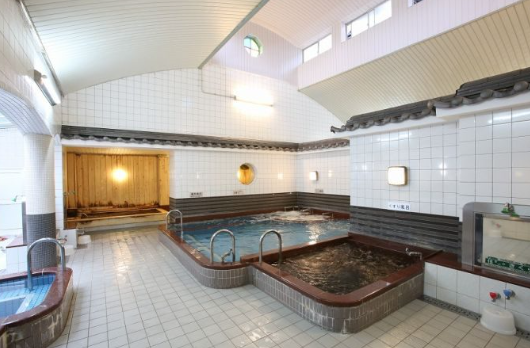
While Funaoka Onsen receives many positive reviews online, there are also some negative comments.
As someone who has visited Funaoka Onsen dozens of times, I will summarize both the positive and negative feedback found in online reviews and provide a fair, unbiased, and accurate explanation of what to expect.
Click here to book a guided tour of Funaoka Onsen ↓
Basic Information about Funaoka Onsen
- Address
82-1 Murasakinominamifunaokacho, Kita-ku, Kyoto City, Kyoto 603-8225, Japan
- Access
- By Bus
Take Kyoto City Bus No. 206 from JR Kyoto Station, get off at “Senbon-Kuramaguchi”, and walk for about 5 minutes. - By Subway and on Foot
From Kuramaguchi Station on the Karasuma Subway Line, it is about a 20-minute walk. - By Taxi / Car
It takes about 15 minutes by taxi from Kyoto Station. The fare may vary depending on the time of day and traffic conditions.
- Opening Hours / Closed Days
Monday, Wednesday, Thursday, Friday, and Saturday:
3:00 PM – 11:30 PM
Sunday:
8:00 AM – 11:30 PM
Tuesday:
Closed
Until recently, Funaoka Onsen had no regular closing day, but from November 2025, it is closed every Tuesday.
As opening hours may change from time to time, please be sure to check the latest information before your visit.
- Admission Fee
550 yen
- Towels and Shampoo Availability
You can either bring your own or purchase them at the reception.
They are available at a reasonable price, making it convenient for those who want to visit hands-free.
- Tattoo-Friendly
This facility allows guests with tattoos to bathe.
Feel free to enjoy your bath without worry.
Click here to book a guided tour of Funaoka Onsen ↓
Positive Reviews
- Many people appreciate that the hot spring offers a wide variety of baths.
There are few facilities that offer such a wide variety of baths.
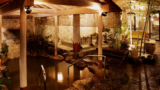
Open-air baths, cypress wood baths, deep baths where you can stand while bathing, jet baths, bubble baths, medicinal baths, electric baths, saunas, cold baths, and waterfall baths.
With this many types of baths available, it’s no wonder the onsen receives high praise.
- Many people appreciate that guests with tattoos are allowed to bathe.
There are not many day-use bath facilities that allow guests with tattoos.
While many hot springs refuse entry to people with tattoos, Funaoka Onsen can be considered a tattoo-friendly bathing facility.
- Many people appreciate that the admission fee is affordable.
Funaoka Onsen offers excellent value for money.
The admission fee of 550 yen per person is incredibly affordable. To enjoy the same quality at other facilities, you would likely need to pay around 1,100 yen.
The reason it is so inexpensive is that the hot springs is not operated for commercial purposes, but rather to support the daily hygiene and well-being of the local community.
- An open-air bath is perfect for relaxing your tired body after sightseeing in Kyoto.
Visiting Funaoka onsen in the evening after a full day of sightseeing in Kyoto is the perfect way to unwind.
Especially from autumn to spring, the open-air bath feels particularly comfortable as the outdoor temperature is cooler.
Negative Reviews
- It is a bit far from major areas like Gion.
There is no train station near Funaoka Hot Spring, so it’s best to use a bus or taxi. Even so, it’s still a bit far, so a good plan is to visit Funaoka Hot Spring on the way to or from Kinkaku-ji.
It’s about a 17-minute walk from Kinkaku-ji, or around 5 minutes by taxi.
- The location can be difficult to find.
It’s true that the location can be hard to find, so be sure to use Google Maps or another navigation app.
Since it’s tucked away in the streets of Kyoto, it can be easy to miss.
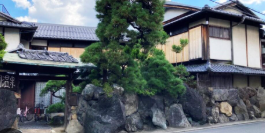
Look for the stone wall at the entrance as a landmark.
- I felt self-conscious about being watched.
Men and women bathe separately, but for many Japanese people, seeing someone with tattoos can still feel unusual.
Others may also be observing whether you follow proper bathing etiquette. To avoid inconveniencing other guests, it’s a good idea to familiarize yourself with hot springs manners beforehand.
Click here to book a guided tour of Funaoka Onsen ↓
- It wasn’t a hot spring.
Although it is not officially a hot spring, Funaoka onsen uses natural groundwater, which makes it feel very close to one.
The definition of a hot spring can be vague, and in many cases, it’s difficult to tell whether a bath is technically a hot spring just by bathing in it.
If you want to truly experience a hot spring, facilities with free-flowing natural spring water (100% source-fed baths) are recommended.
- You need to bring your own soap, shampoo, and towels.
Soap and shampoo are sold for around 100 yen.
Towels cost approximately 200–300 yen.
Even if you purchase towels and other items in addition to the 550 yen admission fee, it is still very affordable.
If you don’t need them after your visit, you can simply dispose of them in the trash.
- My shoes were stolen.
The shoe lockers do not have locks.
However, since they are located right in front of the reception desk, it is unlikely that the shoes were actually stolen. It is more likely that someone mistakenly took the wrong pair.
As a precaution, it’s a good idea to add a small marker or tag to your shoes so they’re easy to identify.
Alternatively, avoid wearing expensive shoes when visiting.
Summary
Visiting Funaoka Hot Spring after seeing Kinkaku-ji is a great way to wrap up a full day of sightseeing in Kyoto.
Some reviews recommend not soaking for too long, and this advice is actually correct. For first-time visitors, it’s best to limit each soak to within 10 minutes.
Staying in the bath for too long can lead to dehydration or feeling unwell, especially if you are not used to bathing in hot water.
- Who Funaoka Onsen Is Not Suitable For
If you are looking for a genuine hot spring, Funaoka Hot Spring may not be the best choice.
Instead, consider visiting Tensho-no-Yu or Tenzan-no-Yu, both of which are known for their high-quality hot spring water in Kyoto.
In addition, if you feel uncomfortable bathing nude, this facility may not be suitable for you.
Most bathing facilities in Japan do not allow swimsuits, so in that case, it’s best to use a private bath instead.
コメント