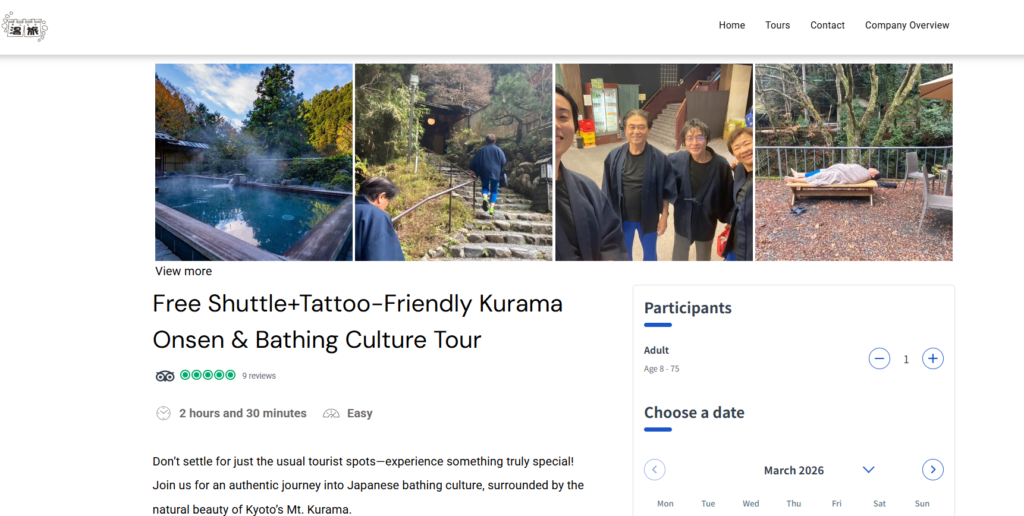
- About Kurama Onsen
- Facility Information
- Rating: ★★★★⯨(24 stars total)
- FAQ for Kurama Onsen
- Q1. Is Kurama Onsen available for day use?
- Q2. Is Kurama Onsen difficult to access?
- Q3. Does Kurama Onsen have an outdoor bath?
- Q4. When is Kurama Onsen most crowded?
- Q5. Can I eat at Kurama Onsen?
- Q6. Can I visit Kurama-dera Temple or Kibune Shrine on the same trip?
- Q7. Is Kurama Onsen suitable for first-time onsen visitors?
- Q8. Can I use the baths if I have tattoos?
- Q9. Who is Kurama Onsen recommended for?
About Kurama Onsen
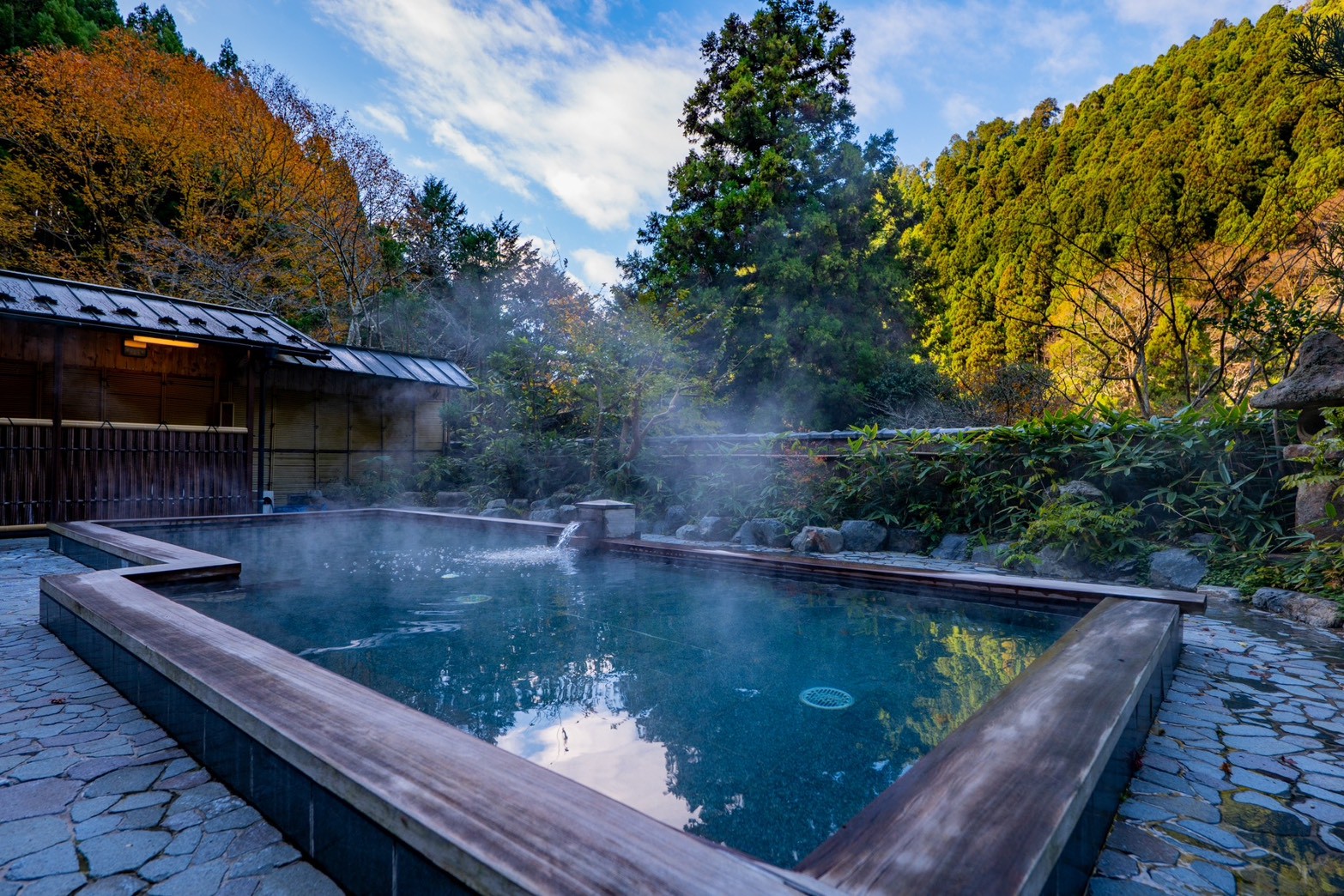
Kurama Onsen is a hot spring facility located in the Kurama–Kibune area in northern Kyoto, offering both day-use and overnight stays. Surrounded by mountains and deep forests, it provides a calm and relaxing onsen experience far from the busy city.
In this article, from the perspective of a Japanese visitor who has used the bath many times, I objectively organize not only the positive aspects but also the points to be aware of, and share practical tips to help first-time visitors enjoy their experience without regret.
Facility Information
Address View it on Google Maps here
Business Hours
10:00–21:00
Restaurant Hours
Lunch: 12:00–15:00 (Last order 14:30)
Dinner: 17:00–20:30 (Last order 20:00)
Parking
30 spaces (free)
Admission Fees
Children (ages 3 to elementary school): ¥1,300
Adults: Weekdays ¥2,500 / Weekends & holidays ¥2,700
*There is also a cheaper ticket for outdoor-bath-only use, but if you want to fully enjoy the hot spring, I recommend paying the full admission and experiencing everything the facility offers.
Rating: ★★★★⯨(24 stars total)
Bath Variety & Quality ★★★★★
The hot spring water at Kurama Onsen is gentle on the skin, making it especially suitable for people who are new to onsen bathing.
There is a cold bath, sauna, indoor bath, and outdoor bath. In particular, the open-air bath surrounded by nature offers a wonderful sense of openness, allowing you to soak slowly and comfortably. It provides a truly relaxing experience for both body and mind.
Personally, I recommend enjoying Kurama Onsen by taking multiple baths throughout your visit, with breaks in between to have a meal or relax in the rest area.
Atmosphere & Authenticity ★★★★★
Its location, surrounded by magnificent nature, strongly conveys the essence of a traditional Japanese onsen experience—quietly soaking in hot spring water in a natural setting, rather than visiting an artificially created, tourist-oriented facility.
Although Kurama Onsen had been operating for many years, it was forced to close once due to the impact of the COVID-19 pandemic. However, it was revived and reopened thanks to the support of devoted fans, showing just how deeply this onsen is loved by the local community.
With its long history and strong popularity among Japanese visitors, Kurama Onsen is a highly satisfying hot spring facility for those who seek nature, tranquility, and an authentic hot spring experience.
Comfort ★★★★★
There is a spacious rest area where you can lie down, allowing you to use the facility comfortably for an extended period of time. The food is also very good, with a wide variety of menu options, making it highly recommended.
Kurama Onsen is an ideal place to soothe your body after hiking on Mt. Kurama.
I really enjoy relaxing my body in the rest area after soaking in Kurama Onsen.
Accessibility for Tourists ★★★★☆
Although Kurama Onsen is located far from Kyoto Station and the city center, making access somewhat inconvenient, its nature-surrounded setting is exactly what makes it so special.
For international visitors who are interested in hot springs, Kurama Onsen should be one of the first choices when visiting Kyoto.
Scenic Value / Surroundings ★★★★★
Many visitors combine their trip with a visit to Kurama-dera Temple or Kibune Shrine, along with hiking in the area. After a hike, soaking in the outdoor bath to warm your body and then cooling off in the mountain air is a truly exceptional experience.
FAQ for Kurama Onsen
Q1. Is Kurama Onsen available for day use?
Yes, Kurama Onsen can be used as a day-use hot spring. You do not need to stay overnight to enjoy the baths, making it a popular stop during sightseeing or hiking.
Q2. Is Kurama Onsen difficult to access?
Kurama Onsen is located in the mountains north of Kyoto, so it takes about 1–1.5 hours from Kyoto Station by train and bus. While access is not very convenient, the remote location is a key part of its charm.
Q3. Does Kurama Onsen have an outdoor bath?
Yes, Kurama Onsen features a large open-air bath surrounded by forest and mountains, allowing guests to enjoy nature while soaking.
Q4. When is Kurama Onsen most crowded?
Because it is located deep in the mountains and the prices are set slightly higher, Kurama Onsen is rarely extremely crowded.
Q5. Can I eat at Kurama Onsen?
Yes, there is an on-site restaurant offering set meals and light dishes. Many visitors enjoy combining bathing with a relaxing meal.
Q6. Can I visit Kurama-dera Temple or Kibune Shrine on the same trip?
Yes, many visitors combine Kurama Onsen with Kurama-dera Temple, Kibune Shrine, and hiking in the area. Visiting the hot spring after a hike is a very popular and rewarding way to enjoy the area.
Q7. Is Kurama Onsen suitable for first-time onsen visitors?
Yes. Kurama Onsen is popular with tourists and is well suited for those who want to experience traditional Japanese onsen culture.
Q8. Can I use the baths if I have tattoos?
Yes, bathing is allowed. There are no issues at all.
Q9. Who is Kurama Onsen recommended for?
It is especially recommended for onsen lovers who want to spend quiet time in nature rather than in the city, and who value atmosphere and authenticity. On the other hand, it may not be suitable for those who prioritize easy access or luxury facilities.
コメント